
The 2025/26 U.S. cotton marketing year, which ran from August 1, 2025 through July 31, 2026, closed amid lower production, volatile prices, and intensifying export competition. Prices faced a challenging first half of the season due to declining demand challenging prices, before the market shifted more bullish in the second half of the season.
US cotton supported by strong exports, increased competition
The U.S. cotton industry is largely supported by strong exports to key regions across the globe. Exports account for roughly 89 percent of projected 2026/27 U.S. cotton demand, leaving domestic mill use a comparatively small part of the demand base. In the 1990s, exports were less than 40 percent of total demand.

U.S. Census data shows accumulated 2025/26 upland cotton export shipments of 12.4 million running bales through the end of the marketing year. This is virtually unchanged from last season. Exports to China continue to decline, as compared to the five-year average, yet shipments to other countries make up for the decrease.
Vietnam remained the leading destination for U.S. cotton in 2025/26. U.S. shipments to Vietnam increased 45 percent from the prior year, helping offset weaker shipments to China, Pakistan, and Turkey. China remains an important buyer, but its share of the U.S. export program has declined relative to historical norms.

Other notable changes include decreases for exports to Pakistan and Turkey. From last year, exports to Pakistan decreased nearly 35 percent and exports to Turkey decreased 31 percent. 2025/26 exports for both countries were also below the five-year averages.
Global export competition remains a challenge for U.S. cotton as Brazil continues to strengthen its presence in the market. Brazil’s competitive position reflects expanding production, a larger exportable surplus, improving logistics, and deeper access to Asian spinning markets.
Sign up for a FREE trial of our advisory services: https://www.traderphd.com/free-trial.
Despite also having to diversify exports due to less Chinese purchases, China remained the top destination of Brazilian cotton exports in 2025/26. However, other countries increased their export share as well. India, specifically, has emerged as a key market.

Brazil exported nearly 15.50 million bales of cotton in 2025/26, up almost 17 percent from last season, according to data from Brazil’s ministry of industry and trade. The country overtook the U.S. as the world’s largest cotton exporter in 2024, and the USDA projects Brazil to maintain the position in 2026/27 with estimated exports at 15.3 million bales.
Crop concerns bolster contract highs
Cotton futures pushed into fresh highs this week, with the new crop contract hitting a new two-year peak. December cotton settled at 92.41 cents per pound Thursday, a new contract high and the strongest close in more than two years.

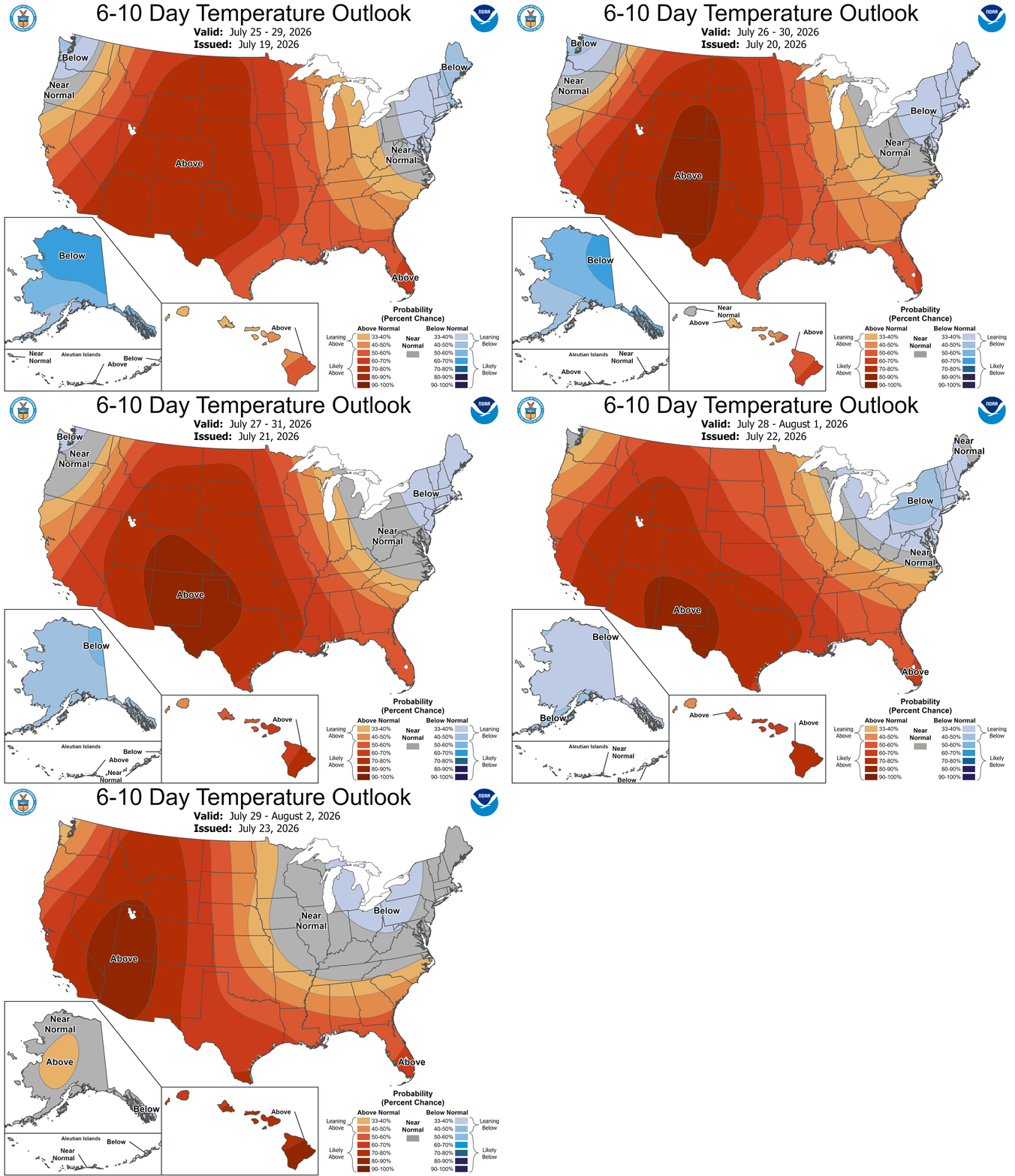
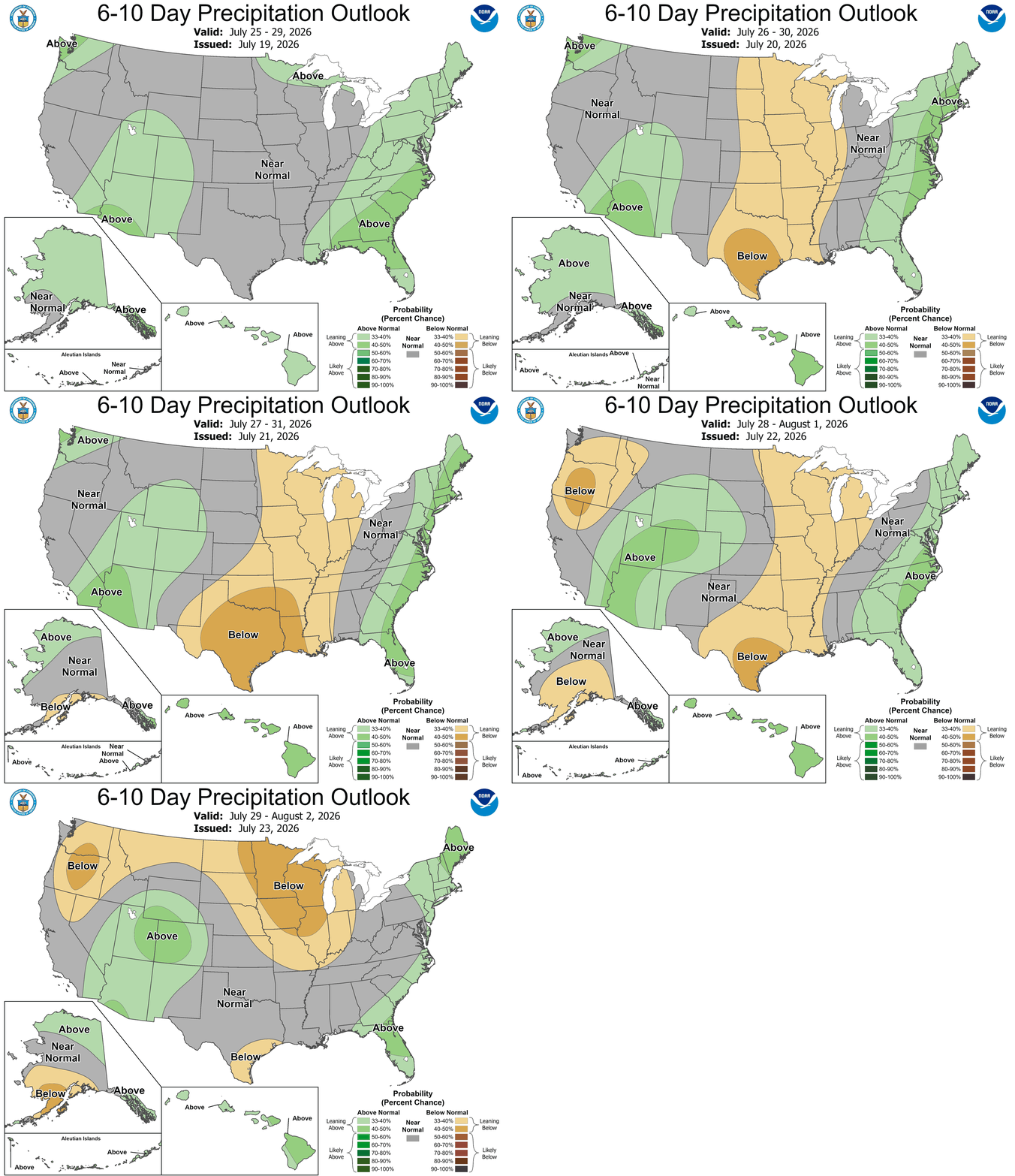
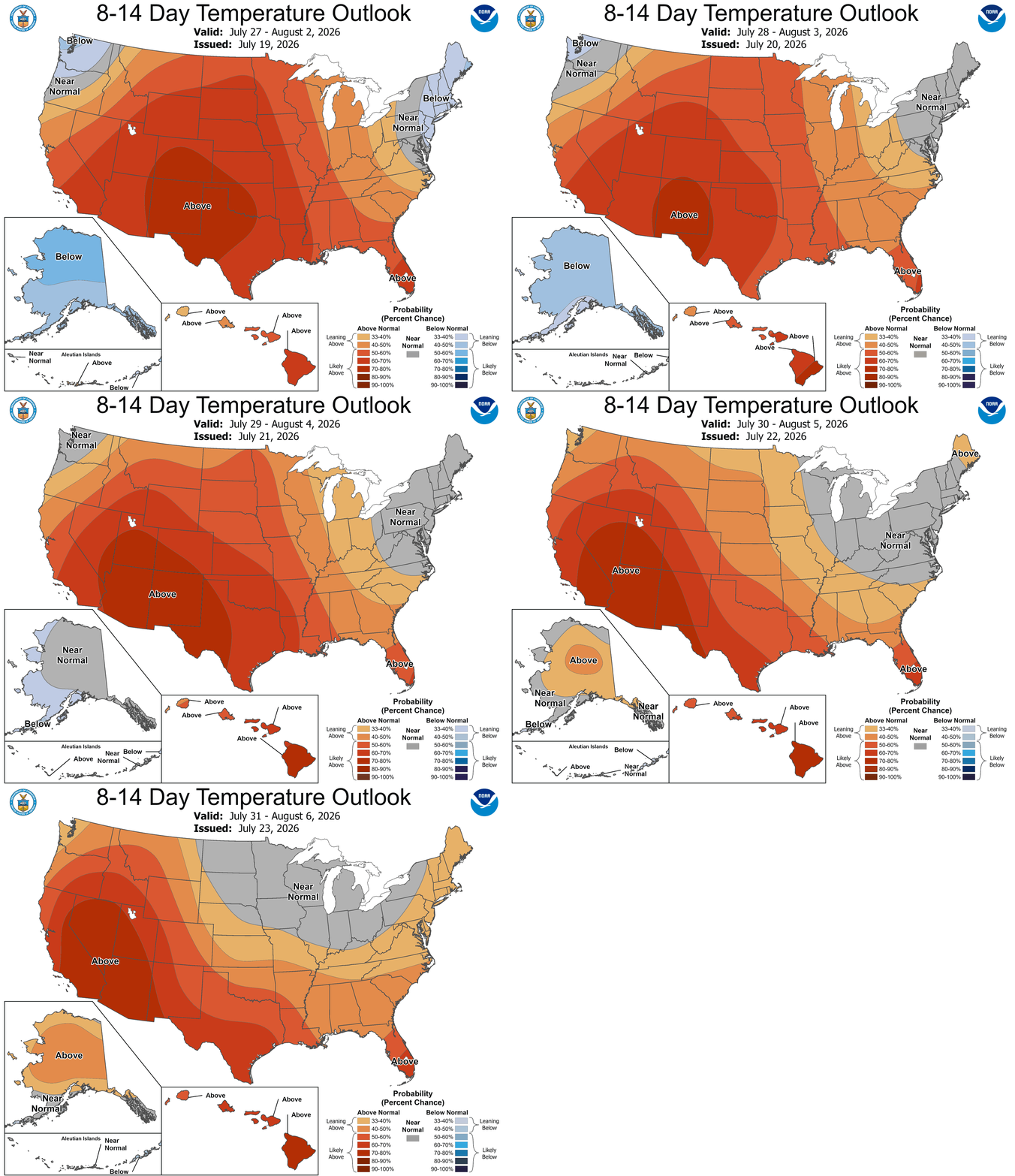
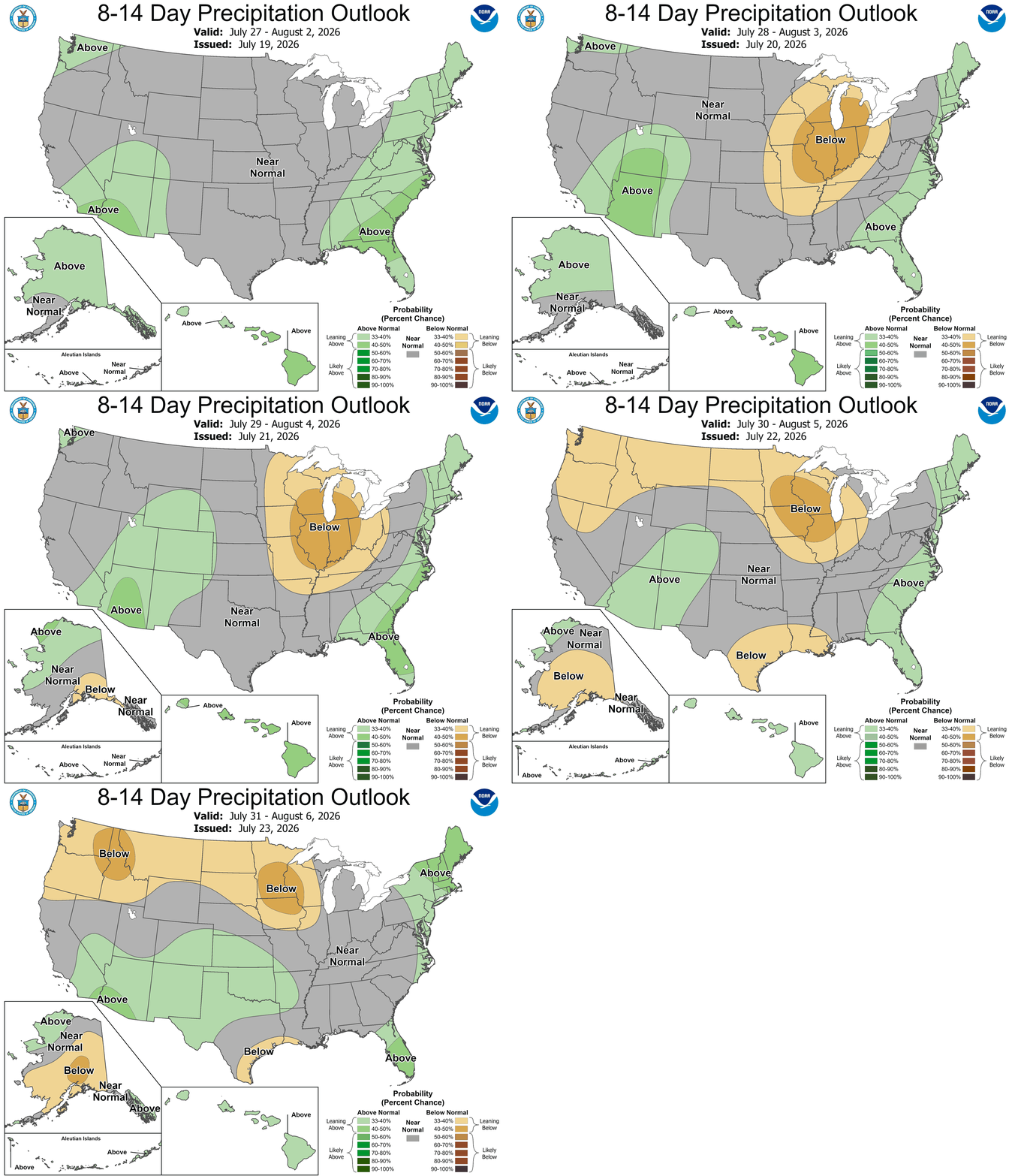
Drier and hotter weather has been driving cotton conditions below their 10-year average as of late and much of the region has received below-average rainfall over the past month. Drought stress remains concentrated in parts of Texas, Oklahoma, and the Mid-South, where crop conditions have deteriorated. Conditions are more favorable across much of the Southeast, limiting the extent of the national production risk.
If drought and heat persist, declining yield potential and increased acreage abandonment could provide support for prices.
Cotton balance sheets tighten supply outlook
According to the latest August WASDE, lower production and ending stocks point to a tighter U.S. cotton balance sheet, while declining yield potential adds further supply risk.
The USDA’ latest Crop Production report pinned the U.S. all-cotton production forecast at 13.61 million bales for 2026/27. The decrease is 90,000 bales less than the July estimate and 300,000 bales less than the 2025/26 crop.
While production decreased, planted area increased to 10.47 million acres and up 6 percent from the June Acreage report. The harvested area projection also increased to 8.19 million pounds per harvested area, an 8 percent increase from last month.
The smaller crop reduced ending stocks to 4 million bales and a stocks-to-use ratio of 28.8 percent. The balance sheet became more burdensome over the past couple of years, helping send prices to multi-year lows late last year. However, signs of tightening domestic and global supplies helped send prices to the highest in about 3 years.

The 2026/27 world cotton supply is projected to decrease about 550,000 bales with a reduction in beginning stocks outweighing the increase in production. Global production is estimated at 117.6 million, 370,000 bales more than last month. Consumption increased 1 million bales to 122.9 million and trade rose to 43.8 million with higher exports from Brazil.
Looking ahead
Strong global competition and tightening supplies will continue to challenge U.S. cotton. Additionally, weather concerns and the pace of global demand will be key factors to watch as the 2026/27 marketing year progresses.
The market is undergoing a rebalancing. Larger U.S. stocks and weak demand expectations helped pressure futures toward multi-year lows late in 2025. More recently, a smaller projected U.S. crop, weather uncertainty, and declining world stocks have supported the recovery. The durability of the rally will still depend on export demand, mill margins, macroeconomic conditions, and Brazil’s competitive export pace.
Editor’s note: This article was updated to reflect the most recent U.S. Census data.
—
PAST PERFORMANCE IS NOT INDICATIVE OF FUTURE RESULTS. FUTURES TRADING INVOLVES SUBSTANTIAL RISK AND IS NOT SUITABLE FOR ALL INVESTORS.